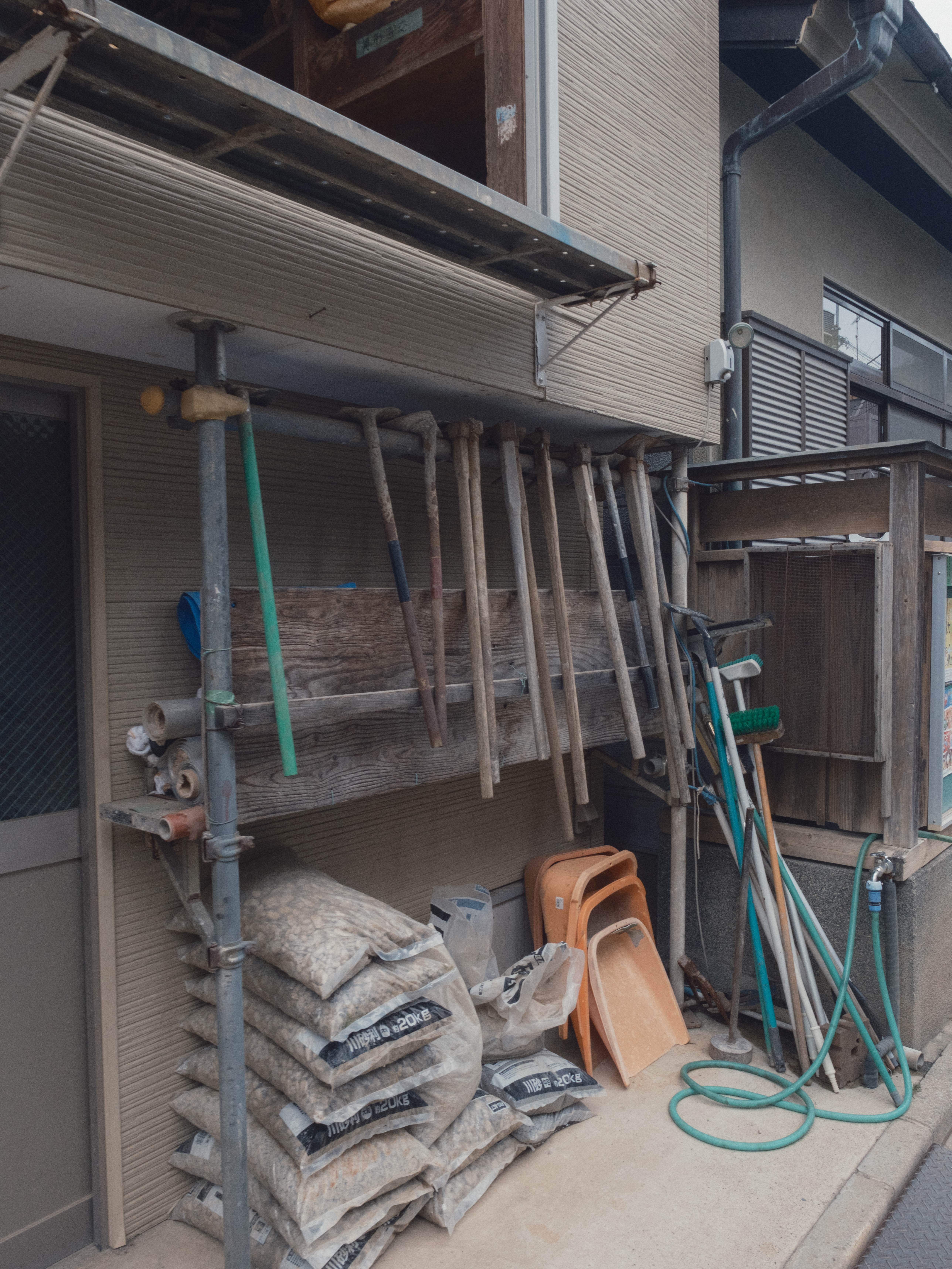
Kintsugi uses lacquer and metal powder to repair ceramics. Its history and techniques are more specific than the popular phrase that every scar makes something more beautiful.
A photographic response should not label any taped, welded, or cracked object as kintsugi. Instead, study how repair changes function, value, and appearance.
Name the repair accurately
Identify material, repair method, and continued use when you can. If the object is actual kintsugi, record maker or owner information with permission.
For ordinary urban repairs, use direct language such as patched, tied, replaced, or reinforced.
Show function and intervention
Photograph the whole object in use, then the repaired boundary. This avoids turning the repair line into a detached symbol.
Side light can clarify relief, while an even frame can show how the intervention belongs to the object.
Resist the automatic lesson
Let viewers encounter the material before supplying a moral about resilience. Some repairs are temporary, invisible, improvised, or evidence of unequal resources.
Edit for accurate material color and texture. Do not add golden hues to imitate a technique that is not present.
Sources and further reading
These references informed the cultural context in this field note.